


A French security researcher has accidentally discovered a zero-day vulnerability that impacts the Windows 7 and Windows Server 2008 R2 operating systems while working on an update to a Windows security tool.
The vulnerability resides in two misconfigured registry keys for the RPC Endpoint Mapper and DNSCache services that are part of all Windows installations.
French security researcher Clément Labro, who...

Facebook has spent years building and deploying artificial intelligence to stamp out hate speech on its massive social network. The company says it's now using the technology to proactively spot nearly 95% of such content that it takes down. That remaining 5%, however, may be tricky to resolve.
On Thursday, Facebook said its AI systems detected 94.7% of the 22.1...

Researchers at NeU, a joint venture between Tohoku University and Hitachi, have developed a prototype toy robot controlled directly by the mind, in collaboration with toy giant Bandai.
This robot, called Zeonic Technics, is a toy designed to help teach science and technology to children. The NeU scientists created a way to interact with the toy by linking the user’s...
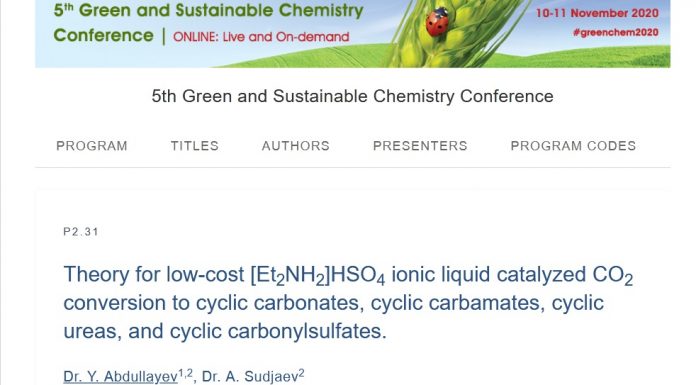
On November 10-11, 2020, Deputy Director for Scientific Work of the Institute of Chemistry of Additives of ANAS, Head of the Laboratory, Associate Professor Afsun Sujayev and Head of the Laboratory of the Institute of Petrochemical Processes and the Department of Baku Engineering University, Ph.D. in Chemistry, Associate Professor Yusif Abdullayev took part in the 5th Green and Sustainable Chemistry...
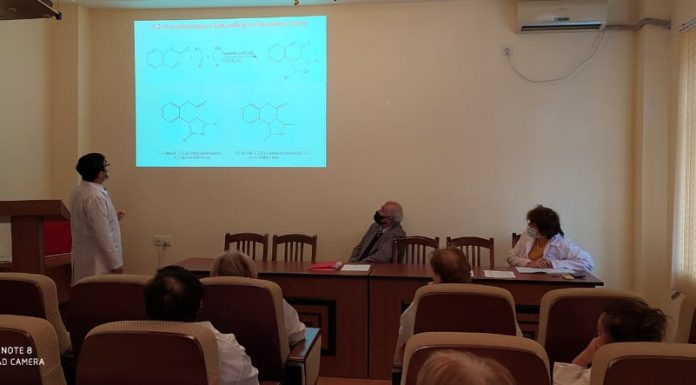
The Scientific Council of Academician A.Guliyev Institute of Chemistry of Additives of Azerbaijan National Academy of Sciences heard reports on the scientific and scientific-organizational results of departments and laboratories for 2020. The director of the institute, academician Vagif Farzaliyev, informing the participants about the agenda, said: “A significant part of the reporting period in connection with the coronavirus pandemic...

At the Scientific Council of Academician A.Guliyev Institute of Chemistry of Additives of Azerbaijan National Academy of Sciences (ANAS), a report on the results of scientific and social activities in 2020 by the Council of Young Scientists and Specialists was heard. Speaking at the event, the chairman of the Council of Young Scientists and Specialists of the Institute, Ph.D....

Google is wrapping up 2020 with what it claims are major performance enhancements to the company’s Google Chrome browser. “This month’s update represents the largest gain in Chrome performance in years,” Matt Waddell, Chrome’s director of product, wrote in a blog post. Sounds pretty exciting on the surface, no? Waddell says a slew of under-the-hood changes and optimizations have led...

To speed up your computer, you need to remove unnecessary programs and change the system startup parameters. This was reported in the material on the website of the Business Insider edition.
According to the authors, often Windows computers slow down due to a large number of useless applications and incorrect settings. First of all, experts recommended reducing the list of...

The Facebook development team has announced the launch of a new feature for the proprietary Facebook Messenger and Instagram.
For both services, disappearing messages are provided with automatic destruction. In Vanish Mode, messages are destroyed as soon as the other person leaves the conversation. As in Snapchat, the user will be warned if his interlocutor decided to take a screenshot...

Messenger WhatsApp has launched a mode of disappearing messages after seven days, according to the company's blog. “WhatsApp messages often stay on our phones forever. While the memories of loved ones and friends are very important to us, most of the messages we send are of little value. In this regard, we are pleased to introduce you to the...